
Bass Fuzz Adventure
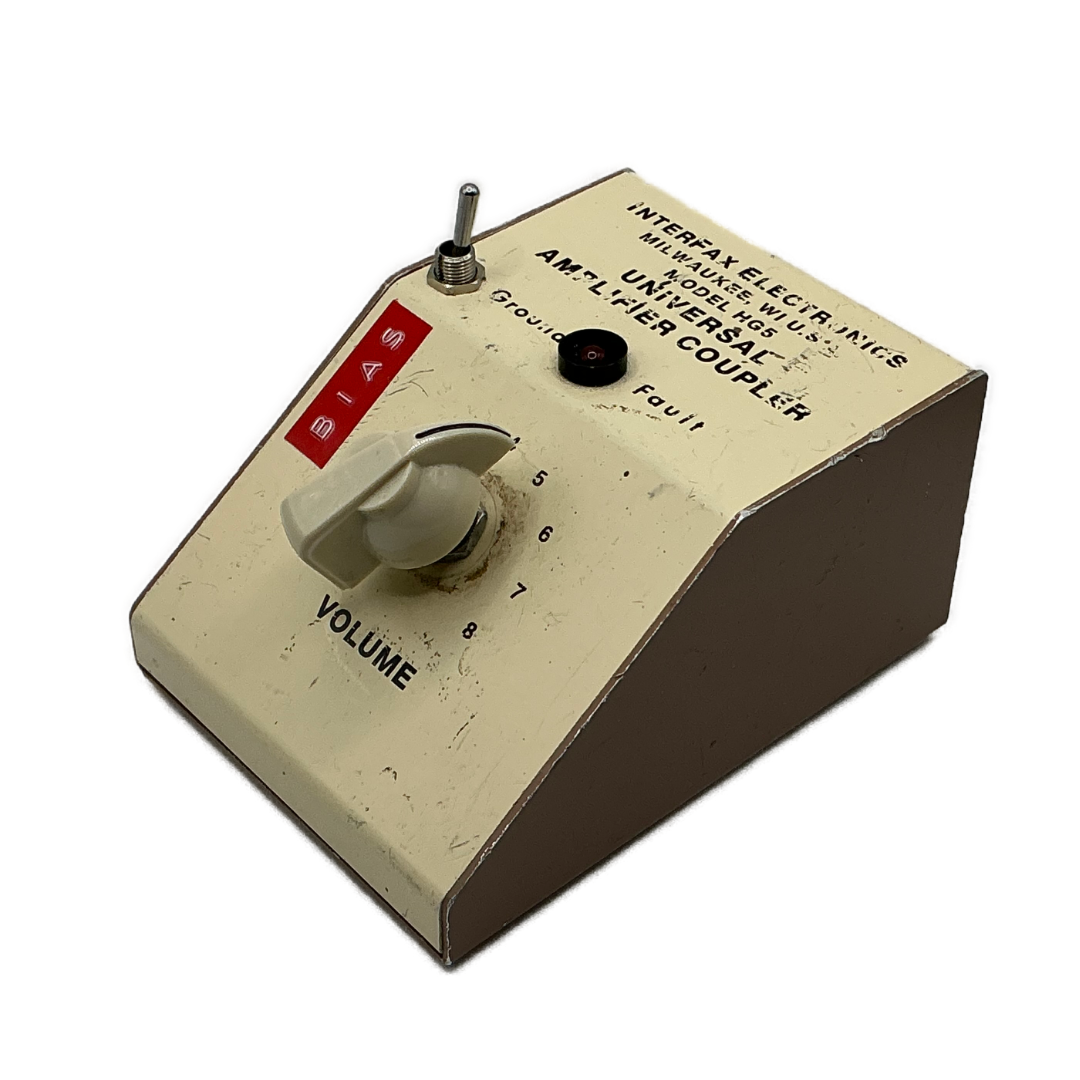
A few weeks ago I met Thomas from RhPf Electronics in Basel. We were meeting to discuss the upcoming Swiss touring pedal board on which our Amplitude Modulator and Q-Field Generator will join guitar effects from other manufacturers based in Switzerland. You can read more about that project here.
When I was leaving he gave me a little box that he had on the shelf in his workshop, an INTERFAX ELECTRONICS UNIVERSAL AMPLIFIER COUPLER, and said maybe I could do something with it.
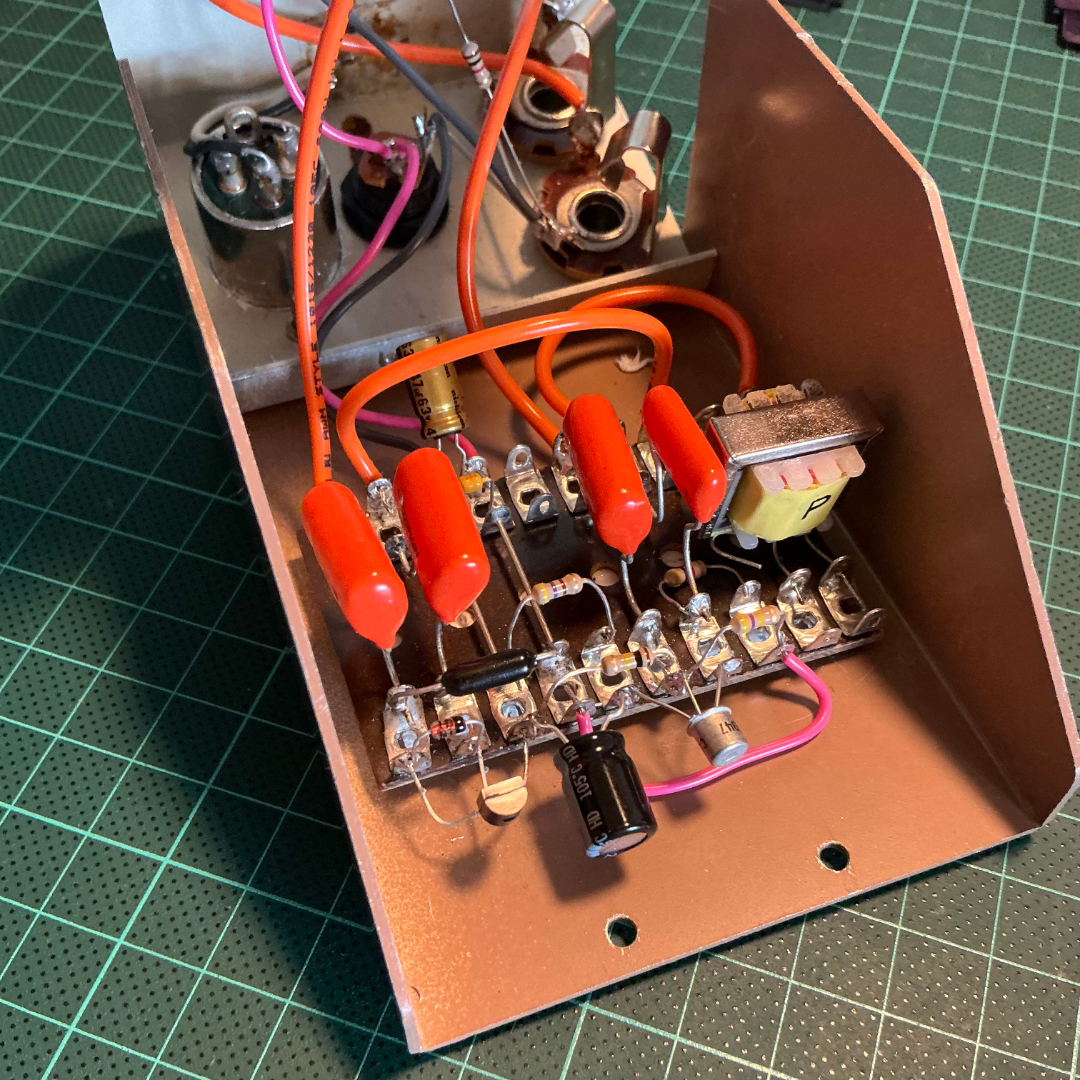
The box sat on my work bench for a while before I opened it up to see what was inside. Basically a nest of parts hanging from jacks.
So what was I going to do with this cool retro enclosure that is probably a piece of music history?
I had never made one of those BASS FUZZ circuits before, I feel like a lot of people starting out building pedals begin with this. So I simulated one in EVERYCIRCUIT to see what the signals looked like and what would happen if I changed some values. The waveforms looked promising enough so I set to work on my bench deciding that some turret board would be the perfect substrate for this little project. It worked and sounded pretty OK but it didn’t really have much sustain.
The first thing I tried was quickly sticking an LM386 in front of it with the gain set to the default value of 20dB. WOW. This thing now sounded absolutely wild, not really a fuzz anymore, more of a dirty overdrive but it hissed like hell, to an unusable level but that’s not exactly unusual for a chip that typically drives speakers in children's toys.
The next step was to build a simple amplifier using a low noise BC109 transistor. But the BASS FUZZ doesn’t really like having a buffer in front of it which was probably why the LM386 experiment resulted in more of a gritty overdrive sound rather than the typical synthy tones the fuzz circuit made before I added the chip in front.
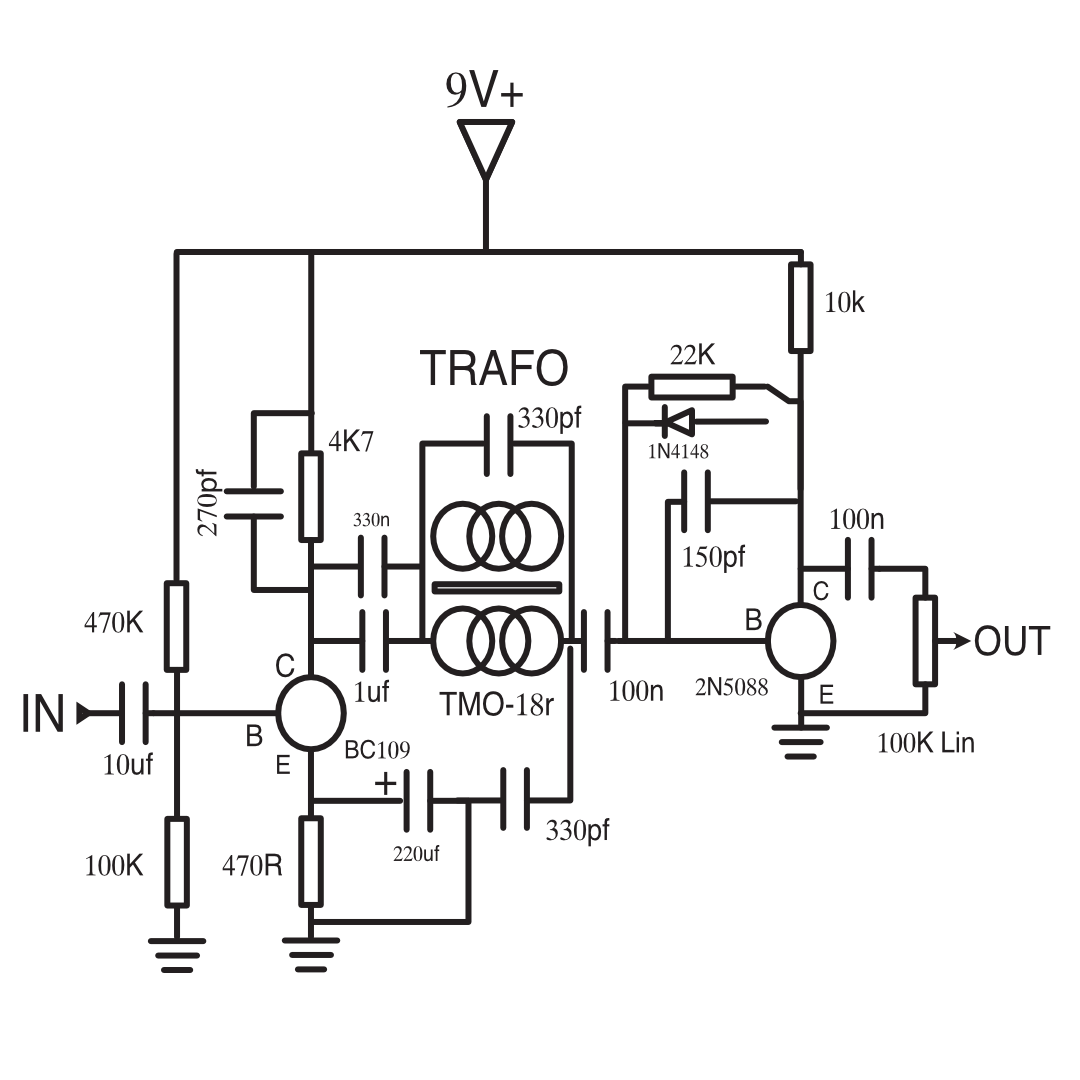
Solution, put a pickup simulator between the two stages. The primary side of a TMO-18r audio transformer should suffice. Some adjustment of the component values in the buffer was necessary to account for this new load and impedance but I’ve heard of this trick being employed by other builders before but I had no idea what this thing would sound like before I plugged it in.
The first stage has a gain of about 34 and the BASS FUZZ is just a straight up BASS FUZZ circuit. I don’t usually do point to point builds like this for sale as they are a pain compared to PCB so this isn’t exactly my neatest work.
So what did I end up with? Some sort of super high gain, always on square wave fuzz which is fun and all but its a bit limiting. I found that by adding a switch to bypasses the BASS FUZZ diode with a resistor it turns into a standard two stage fuzz what cleans up really nicely when the guitars volume nob is rolled back.
Do I plan on making a product from this? I don’t know yet, but I have posted a drawing of the schematic above for anyone interested.
Check out the videos below.